2026 10th International Conference on Intelligent Computing, Communication and Network Technology
Keynote Speakers
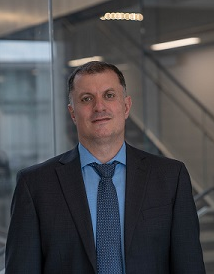
Prof. Abdallah Shami (Fellow of IEEE,
Fellow of CAE, Fellow of EIC)
Western University,
Canada
Speech Title: Toward Self-Managing Networks: AI-Driven Autonomous Network and Service Management
Abstract: Future communication networks are rapidly evolving into highly distributed, cloud-native systems spanning heterogeneous infrastructures, technologies, and administrative domains. As networks grow in scale, complexity, and dynamism, traditional human-driven management approaches are becoming increasingly difficult to sustain. The next generation of networks will require a fundamental shift toward zero-touch and autonomous network and service management, where networks can continuously observe their environment, anticipate changing conditions, make intelligent decisions, and adapt with minimal human intervention.
This keynote will explore the evolution toward self-managing communication networks and the role of artificial intelligence in enabling this transformation. It will discuss key challenges in developing learning-based approaches for real-time network management, including resource allocation, load balancing, network slicing, routing, scaling, and self-healing under uncertain and continuously changing conditions.
In addition, the keynote will highlight the importance of moving beyond simulation toward realistic, end-to-end experimental environments for developing and validating autonomous networking technologies.
Biography: Abdallah Shami is a Professor in the
Department of Electrical and Computer Engineering at Western University,
London, Ontario, Canada, where he serves as Department Chair and holds a
Western Research Chair. He is also the Director of the Optimized
Computing and Communications Laboratory. His research interests include
smart systems, network and service management, and applied machine
learning. He currently serves as Editor-in-Chief of IEEE Transactions on
Network and Service Management and has held editorial roles with several
international journals. He is also the Chair of the IEEE Region 7
Publications and Communications Committee.
Dr. Shami is a Fellow of
the IEEE, the Canadian Academy of Engineering (CAE), and the Engineering
Institute of Canada (EIC).
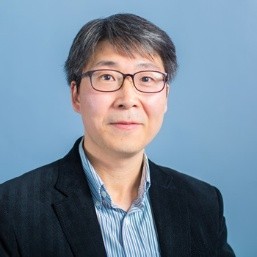
Prof. Gyu Myoung Lee
Liverpool John
Moores University, UK
Speech Title: New Internet Design: Building the Trusted 6G & Agentic AI Infrastructure for Future Digital Ecosystems
Abstract: As future 6G networks evolve to fully integrate with societal, physical, and cyber infrastructures, the paradigm of network design is undergoing a fundamental shift transitioning from merely adding AI capabilities to embedding AI directly into the architectural core. Building upon the visionary framework of 3C (Co-design, Collaboration, and Composability) networks, this keynote presents a New Internet Design, focusing on the rapidly emerging Agentic AI Ecosystem.
As intelligence becomes increasingly distributed, managing autonomous AI agents introduces critical challenges in scale, interoperability, and trust, especially within strict data sovereignty and regulatory landscapes like Europe. To bridge the gap between 6G network infrastructure and distributed AI, this talk presents a comprehensive architectural blueprint featuring AI Agent Orchestration, AI Agent Spaces, and an AI Agent Mesh powered by an Agent Name Service (ANS).
By unifying 3C-based 6G networks with a federated agent infrastructure, this presentation outlines how to construct a trusted, human-centric, and fully interoperable Internet foundation designed for the next generation of intelligent digital services.
Biography: Gyu Myoung Lee is a
professor at the Liverpool John Moores University (LJMU), UK. He was
affiliated with KAIST, Daejeon, Rep. of Korea, as an Adjunct Professor
from 2012 to 2024. Before joining the LJMU in 2014, he worked at the
Institut Mines-Telecom from 2008. Until 2012, he was invited to work at
ETRI, Rep. of Korea. He worked as a research professor at KAIST, Rep. of
Korea and as a guest researcher at NIST, USA, in 2007. His research
interests include Internet of Things, digital twin, computational trust,
blockchain with privacy preservation, data and AI governance, knowledge
centric networking and services considering all vertical services, Smart
Grid, energy saving networks, cloud-based big data analytics platform
and multimedia networking and services. Prof. Lee has been actively
participating in standardization meetings including ITU-T SG 13 and
SG20, IETF and oneM2M, etc., and currently serves as a Working Party
chair and the Rapporteur of Q16/13 on trustworthy networking and
services and Q4/20 on data analytics, sharing, processing and management
in ITU-T. He is the Vice-Chair of ITU-T FG-AINN as well as the Convenor
of Web3-adhoc. He was also the chair of ITU-T Focus Group on Data
Processing and Management (FG-DPM). He has contributed more than 500
proposals for standards and published more than 200 papers in academic
journals and conferences. He received several Best Paper Awards in
international and domestic conferences and served as a reviewer of IEEE
journals/conference papers and an organizer/member of committee of
international conferences. He is a Senior Member of IEEE.
Prof. Lee
received his BS degree in electronic and electrical engineering from
Hong Ik University, Seoul, Rep. of Korea, in 1999 and MS, and PhD.
degree from KAIST, Daejeon, Rep. of Korea, in 2000 and 2007,
respectively.
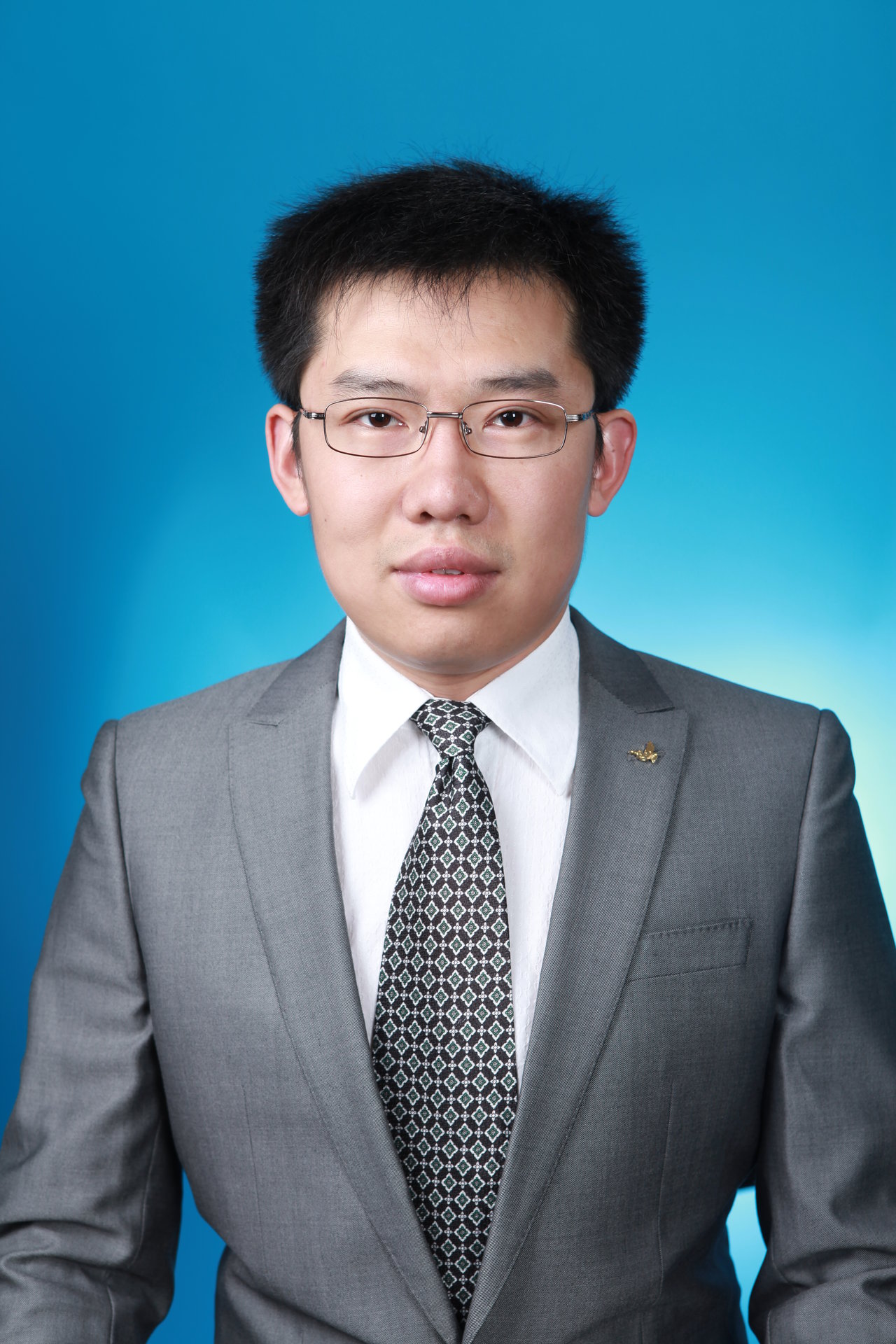
Prof. Shuai Han
Harbin Institute of Technology, China
Speech Title: Integrated Space-Terrestrial Network (ISTN):The Road Ahead
Abstract: Integrated space-terrestrial network (ISTN) has been envisioned as a key component of future 6G systems as it enable ubiquitous connectivity, seamless coverage, and diversified services on a global scale. However, high mobility, rapidly varying network topology, constrained on-board resources, and heterogeneous service requirements pose fundamental challenges to the design of ISTNs.
This keynote will present recent research efforts toward addressing these challenges from multiple perspectives. First, channel modeling and multi-dimensional parameter estimation for highly dynamic satellite environments will be introduced. At the physical layer, advanced multiple-access and interference management based on rate-splitting multiple access will be discussed. At the network layer, distributed network orchestration for reliable service provisioning under dynamic conditions will be presented. At the application layer, emerging satellite communication architectures enabled by holographic metasurfaces will be explored as a representative use case.
Finally, the keynote will provide an outlook on promising research opportunities and open challenges toward more intelligent, and service-oriented ISTNs.
Biography: Shuai Han (S’11–M’12–SM’17) is currently a full Professor at the Department of Electronics and Communication Engineering, Harbin Institute of Technology. Shuai Han’s research interests include intelligent communications, satellite IoT and integrated satellite-terrestrial communication networks. Over his academic career, his students and he have contributed in various fields in wireless networks.
He has authored or co-authored over 100 technical papers in major journals and conferences. As PI, he has more than thirty grants on wireless networks and positioning. He is an associate editor of IEEE China Communications, Journal of Telemetry, Tracking and Command, Journal of Signal Processing.